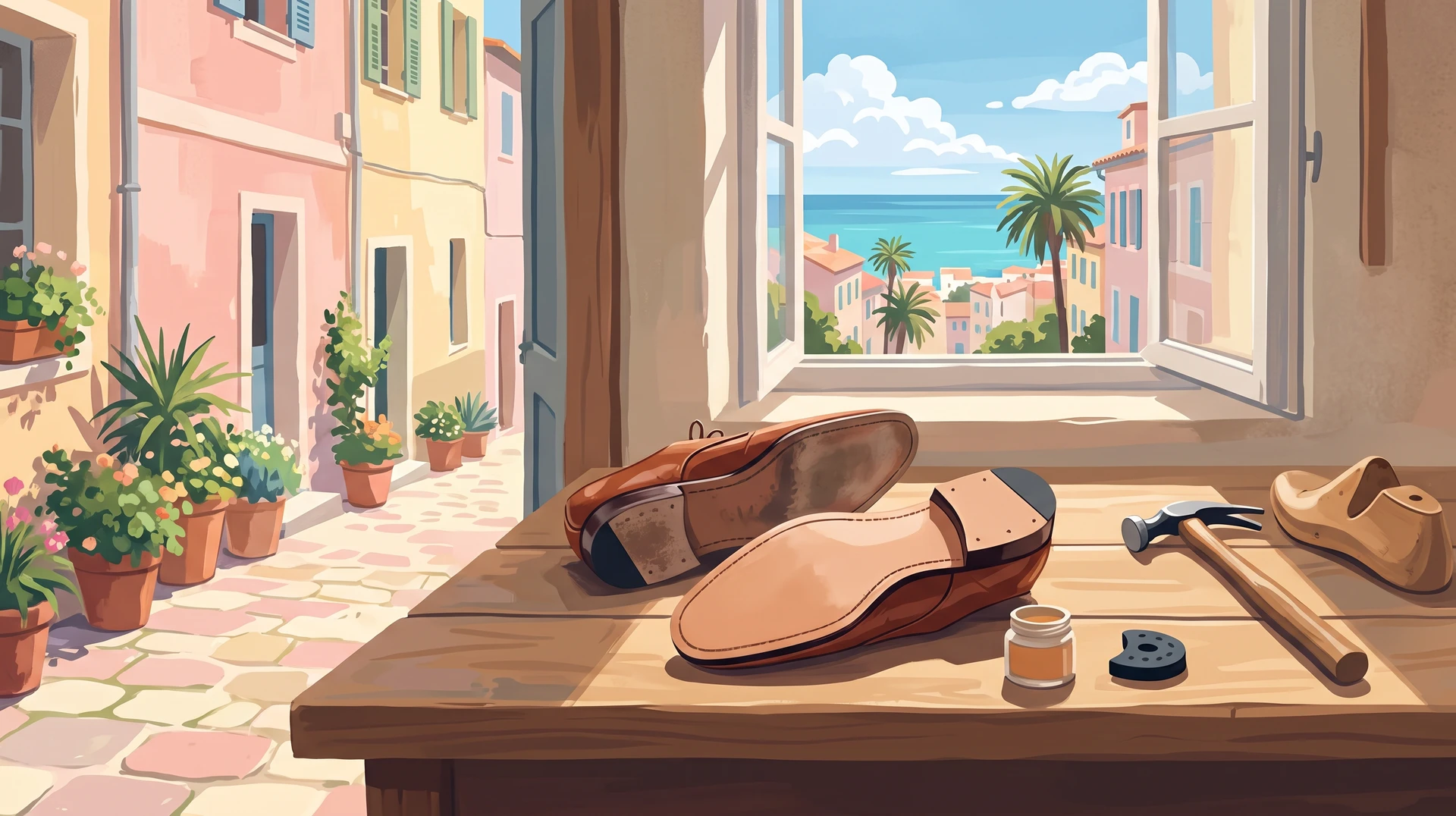
A good pair of leather shoes can last for years. On one condition: replace what wears out in time, meaning the heel and the sole. Waiting too long costs more, and sometimes the whole pair.
1. Keep an eye on the heel
The heel wears first, and rarely evenly: most people press harder on the outer back edge. When the heel tip, the small piece under the heel, is worn down to the block, it needs replacing. It is quick. Later, it is the heel itself that has to be rebuilt.
2. Spot a sole that is too thin
Press with your thumb under the front of the foot. If the sole gives way, or a lighter patch appears, it is almost worn through. Once there is a hole, water gets in and damages the insole, the inner piece the whole shoe is built on.
3. Fit sole protectors while the pair is new
A sole protector is a thin layer of rubber glued under the front of a leather sole. It takes the wear instead of the leather, keeps it dry and stops you slipping on a wet pavement. The best time to fit one: before the original sole starts to wear.
4. Leather or rubber
For a full resole, there are two options. Leather breathes and keeps the look of a dress shoe, but it is more slippery and does not like rain. Rubber grips better. The choice mostly comes down to use: office or daily walking.
5. Know what cannot always be repaired
Not every shoe can be resoled. A stitched sole can be replaced without difficulty. An injected sole, common on trainers, is fused to the upper: repair is sometimes impossible, or more expensive than the pair. The cobbler will tell you before starting.
Conclusion
Monsieur Minutes replaces heels and soles and fits sole protectors in its shops in Le Cannet and Grasse. Bring the pair in: the assessment is done on the spot, before any work.
Leave a Reply